Facing a Heating Failure Before the November Chill Sets In
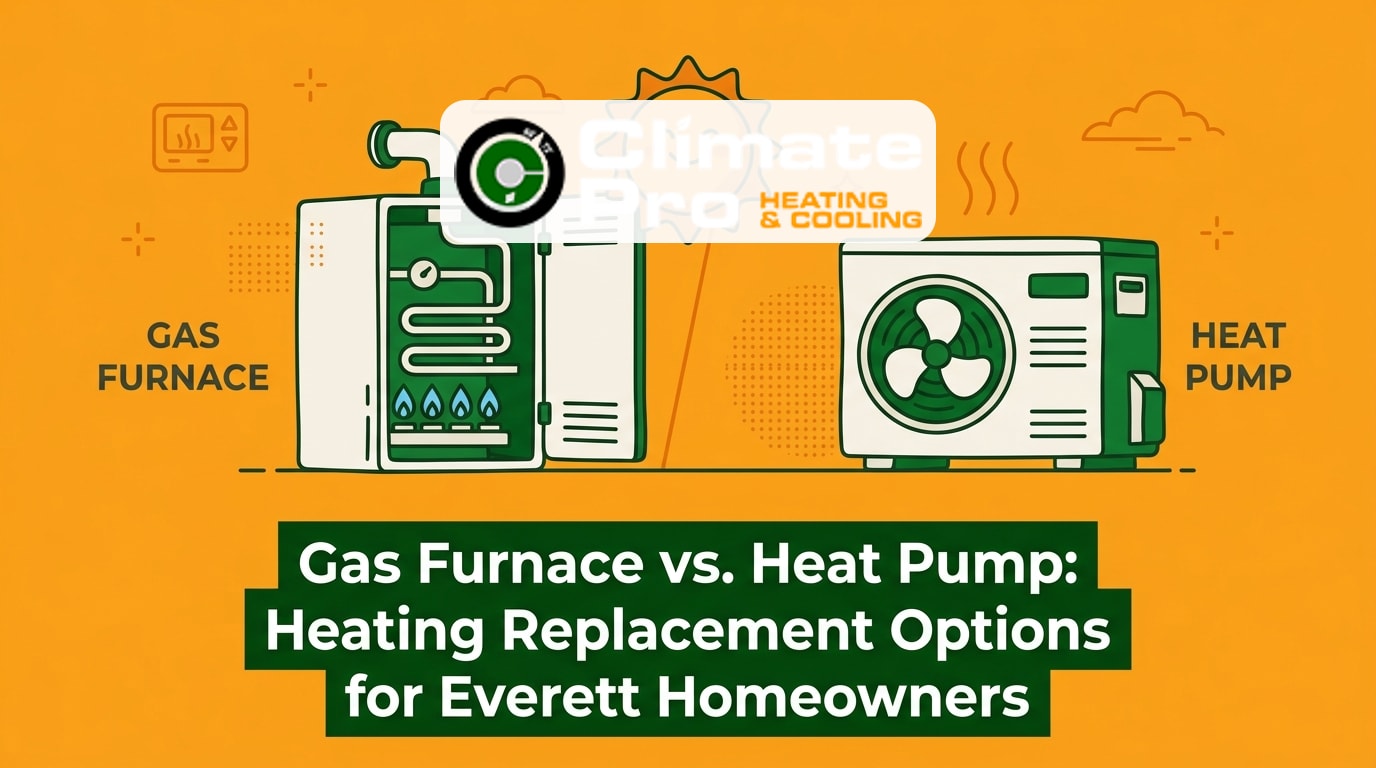
The November pre-winter temperature drop is already settling into the Puget Sound region, and that strange noise coming from your old heating system isn’t going away on its own. At Climate Pro Heating & Cooling, we often hear from homeowners whose equipment starts struggling right as the weather turns. When this happens, looking at options comparisons for homeowners is the smartest proactive step you can take. For most local homes we service, the primary decision boils down to a clear choice: installing another traditional gas furnace or transitioning to a modern, high-efficiency heat pump.
Dealing with an aging system is stressful, especially when you know months of cold, damp weather are just ahead. A traditional gas furnace has been the default for decades, providing familiar, high-intensity heat. However, modern heat pumps have completely changed the residential HVAC landscape. A heat pump is a two-in-one system that provides reliable winter warmth while also acting as your air conditioning services during the summer months.
The urgency of acting now: Waiting for a total system breakdown leaves you scrambling for emergency installations in a freezing house. Upgrading your failing heater today not only secures your winter comfort but can also prevent an unexpected AC repair service call when the weather eventually warms up again. By evaluating your choices before the deep winter freeze, you retain control over your home’s comfort, your energy footprint, and your peace of mind.
Why the Pacific Northwest Climate Dictates Your Heating Choice
Heating a home in the Pacific Northwest is an entirely different challenge than heating a home in the Midwest or the Northeast. In our years of dialing in HVAC systems across Everett WA, our team has learned that generic national advice often focuses on surviving sub-zero blizzards, but the greater Puget Sound region presents a unique environmental profile that directly impacts how your HVAC equipment performs.
Our specific local climate is defined by damp, 30-40 degree winter lows. This specific temperature range creates a unique heating environment where moisture control is just as important as raw heat output. Here is how our regional weather patterns should influence your decision:
- The reality of “perceived cold”: In dry climates, 35 degrees feels crisp. In our damp coastal climate, 35 degrees feels bone-chilling because the heavy moisture in the air pulls heat away from your body faster. You need a system that provides consistent, even airflow to combat that pervasive dampness.
- Rare extreme freezes: While we occasionally see snow and freezing temperatures, extended sub-zero cold snaps are incredibly rare locally. This changes the mathematical equation on heating efficiency, making certain technologies far more viable here than they are in colder states.
- The need for continuous circulation: Systems that blast heavy heat and then shut off completely can allow damp, stagnant air to pool in your home between cycles. Continuous, gentle air circulation helps maintain a more comfortable perceived indoor temperature.
Understanding these regional nuances is the first step in choosing a system that won’t just heat your home, but will actually keep it comfortable against our specific brand of winter chill.
Gas Furnaces: Traditional Warmth and Familiar Reliability
For generations, the gas furnace has been the undisputed king of home heating. If your Everett WA or Puget Sound region home already has natural gas lines installed, our technicians often recommend a replacement gas furnace as the most straightforward upgrade path. These systems work through a process of controlled combustion, burning natural gas to heat a metallic heat exchanger, while a blower motor forces air over that hot metal and into your ductwork.
The primary appeal of a gas furnace is the sheer intensity of the heat it produces. When the thermostat calls for warmth, a gas furnace delivers air from your vents that is significantly warmer than your body temperature. This provides a rapid, cozy feeling that many homeowners find deeply comforting during a sudden temperature drop.
Pros of a Replacement Gas Furnace:
- Rapid temperature recovery: If you turn your thermostat down while away at work, a gas furnace can recover that lost heat very quickly once you return.
- High supply air temperatures: The air coming out of your vents is exceptionally warm, providing a familiar “blast” of cozy heat.
- Established technology: Modern, high-efficiency condensing furnaces are incredibly reliable, utilizing proven technology with long expected lifespans.
Cons of a Replacement Gas Furnace:
- Fossil fuel reliance: Gas furnaces require burning combustible fuels, which carries a larger environmental footprint and leaves you subject to fluctuating natural gas prices.
- Heating only: A furnace only solves half of your year-round comfort needs. You will still need a completely separate air conditioner for the summer.
- Combustion safety requirements: Because they burn gas, furnaces require strict, routine safety checks to ensure the heat exchanger is intact and carbon monoxide is safely venting outdoors.
Modern Heat Pumps: Built for Damp, 30-Degree Winter Nights
There is a persistent, outdated myth that heat pumps simply do not work in the cold. A pattern we see often is homeowners assuming this based on units manufactured in the 1990s. While that may have been true then, modern cold-climate heat pumps are engineering marvels. As we face the November pre-winter temperature drop, it is crucial to understand that today’s heat pumps actually thrive in 30-40 degree weather without needing constant backup heat.
Instead of burning fuel to create heat, a heat pump uses electricity to transfer heat. Even when it feels freezing outside to human skin, there is still abundant thermal energy in the outdoor air. A heat pump extracts that ambient heat, compresses it to raise its temperature, and moves it inside your home.
Here is a step-by-step look at why this technology is ideal for our specific climate:
- Heat extraction: Liquid refrigerant in the outdoor unit absorbs ambient thermal energy from the damp winter air, turning into a low-temperature gas.
- Compression: The system’s compressor pressurizes this gas, drastically raising its temperature.
- Heat transfer: The hot gas travels to your indoor coil, where your blower motor pushes air across it, delivering warm, comfortable air into your living spaces.
- Consistent operation: Rather than blasting heat and shutting off, modern variable-speed heat pumps run continuously at lower speeds, providing incredibly even temperatures and excellent moisture control.
Because they transfer heat rather than generating it from scratch, heat pumps operate at extraordinary efficiency levels. However, because they run year-round, they do require consistent care. Enrolling in a professional HVAC maintenance plan is the best way to keep a heat pump running optimally through heavy winter use, ensuring the outdoor coil remains clean and the refrigerant charge stays perfectly balanced.
The Year-Round Advantage: Heating and Cooling in One System
Perhaps the most compelling argument for upgrading to a heat pump in the Everett WA and Puget Sound region is its dual functionality. In our daily service calls, we see how much homeowners appreciate that a heat pump is not just a winter heater; it is a comprehensive, year-round climate control system.
This magic is made possible by a component called a reversing valve. During the winter, the heat pump absorbs heat from outside and moves it inside. When the summer heatwaves arrive, the reversing valve shifts, and the entire process runs backward. The system absorbs the heat from inside your home and dumps it outside, functioning exactly like a traditional air conditioner.
Consolidating your HVAC equipment simplifies your life as a homeowner. Instead of maintaining two entirely separate systems with different lifespans and distinct mechanical components, you rely on one highly efficient unit. This streamlined approach makes your routine AC maintenance service much easier to manage, as your technician is servicing the exact same equipment they checked during the fall.
Furthermore, if you spent last summer struggling to diagnose your AC not cooling properly, replacing your failing winter heater with a heat pump solves both problems at once. You eliminate the stress of an aging furnace and bypass the frustration of an unreliable summer air conditioner in a single upgrade.
Side-by-Side Comparison: Evaluating Your Replacement Options
Making an informed decision requires looking at the facts side-by-side. When our team walks customers through these choices, we emphasize that both systems have their place in the Everett WA and Puget Sound region, but they operate on fundamentally different principles. This direct comparison highlights what you can expect from each technology.
| Feature | Modern Gas Furnace | Cold-Climate Heat Pump |
|---|---|---|
| Primary Function | Winter heating only | Winter heating and summer cooling |
| Energy Source | Natural gas (combustion) | Electricity (heat transfer) |
| Heat Delivery Style | Intense, rapid blasts of very hot air | Steady, continuous, gentle warmth |
| Environmental Impact | Burns fossil fuels on-site | Zero on-site emissions |
| Ideal Local Climate | Effective in any extreme cold | Perfectly matched for damp 30-40°F lows |
Efficiency and Performance Metrics
When you evaluate these systems, you will encounter different efficiency ratings. Gas furnaces are measured by AFUE (Annual Fuel Utilization Efficiency). A high-efficiency condensing furnace might boast a 96% AFUE rating, meaning 96% of the fuel is converted to usable heat, while 4% is lost as exhaust gas.
Heat pumps, on the other hand, use HSPF (Heating Seasonal Performance Factor) for winter efficiency and SEER (Seasonal Energy Efficiency Ratio) for summer cooling. Because heat pumps move heat rather than create it, they can frequently operate at over 300% efficiency—meaning they output three times more heat energy than the electrical energy they consume to run the compressor. Additionally, the continuous operation style of a variable-speed heat pump naturally provides better indoor air circulation, which helps mitigate the feeling of dampness inside your home during the rainy season.

Making Your Decision: Generic Rebates and Pre-Winter Timing
As the November pre-winter temperature drop accelerates, the window for proactive decision-making begins to close. We know firsthand that local HVAC schedules book up incredibly fast with emergency no-heat calls once the first hard freeze hits. By evaluating your options now, you ensure that you are making a calculated investment rather than a panicked purchase while shivering in your living room.
As local experts, the team at Climate Pro Heating & Cooling can guide you through these urgent pre-winter heating replacements using realistic, local data tailored to your home’s specific square footage and ductwork. We understand the nuances of the regional climate and can help you navigate the transition smoothly.
Financial incentives to consider: The push toward high-efficiency, electric-based heating has resulted in numerous financial incentives. Depending on the exact equipment you choose, generic federal tax credits and local utility rebates may apply to qualifying high-efficiency heat pump installations. Because these programs change frequently and depend on your specific utility provider, we always recommend consulting with a tax professional or your local utility company to verify current incentive programs. Factoring these potential savings into your decision can significantly shift the long-term value equation in favor of a modern heat pump.
Frequently Asked Questions About Heating Replacements
Is a heat pump effective in Washington state winters?
Yes, modern heat pumps are highly effective in Washington state winters. Our technicians consistently see that the Everett WA and Puget Sound region rarely experiences the extreme, prolonged sub-zero temperatures that challenge older heat pump technology. Today’s cold-climate heat pumps are specifically engineered to extract ambient heat efficiently even when outdoor temperatures dip into the 20s and 30s, making them an ideal match for our damp, moderate winter climate.
Should I switch from a gas furnace to a heat pump?
Switching from a gas furnace to a heat pump is an excellent choice if you want to reduce your reliance on fossil fuels, improve your home’s energy efficiency, and add summer cooling capabilities. A heat pump provides a two-in-one solution that streamlines your HVAC equipment. However, if your home lacks the proper electrical panel capacity to support a heat pump, a high-efficiency gas furnace remains a highly reliable and powerful alternative.
At what temperature does a heat pump become inefficient?
Older heat pumps often lost efficiency around 40 degrees, but modern variable-speed, cold-climate heat pumps maintain high efficiency well below freezing. Many current models can operate effectively at temperatures as low as 5 degrees Fahrenheit before relying heavily on supplemental backup heat. For the vast majority of our local winter nights, a modern heat pump will remain in its optimal efficiency zone.
What is the best heating system for the Pacific Northwest?
The “best” system depends on your home’s infrastructure, but we frequently recommend modern heat pumps as the ideal match for the Pacific Northwest climate. Our moderate winter temperatures allow heat pumps to operate at peak efficiency for most of the year. They provide the steady, continuous airflow needed to combat damp indoor air, while also offering the immense benefit of summer air conditioning during our increasingly warm July and August heatwaves.
Do I need backup heat with a modern heat pump?
Most heat pump installations do include a supplemental or “backup” heat source, typically in the form of electric resistance heat strips built into the indoor air handler. These strips automatically engage during defrost cycles or on the rare occasions when the outdoor temperature drops so severely that the heat pump needs a temporary boost. However, with a properly sized modern unit, this backup heat will run very infrequently in our moderate coastal climate.
Prepare Your Home for Reliable Winter Comfort
As local HVAC professionals, we know that choosing the right heating system is one of the most significant investments you will make in your home’s comfort and long-term value. Whether you prefer the intense, familiar warmth of a high-efficiency gas furnace or the year-round, eco-friendly versatility of a modern heat pump, the key is making a proactive choice before your current system completely fails.
With the November pre-winter temperature drop already at our doorstep, now is the time to evaluate your home’s specific needs. By understanding how our unique coastal climate impacts heating performance, you can confidently select a system that provides reliable, efficient comfort for years to come. Reach out to a local professional to assess your ductwork, electrical capacity, and heating requirements before the coldest weather arrives.